
Introduction
Olive Group Restaurant has once again reshaped Bengaluru’s dining landscape by transforming the much-loved Toast & Tonic space on Wood Street into an immersive new experience called The Hood.
Table of Contents
ToggleWhen Toast & Tonic shut its doors in May last year, the reaction was emotional. “There were teary faces,” recalls AD Singh, Founder and MD of the Olive Group of Restaurants. “People had built memories with us over nine years. But it was time to refresh.” That refresh has arrived in the form of The Hood—a global neighbourhood-inspired concept that brings together food, rituals, and culture from three iconic regions of the world.
The Olive Group In Bengaluru
The Hood isn’t about imitation; it’s an interpretation. Inspired by the serenity of a Kyoto teahouse set in Gion, the frenetic excitement of Mar Mikhael alongside Raouche in Beirut and the relaxed warmth of San Lorenzo in Florence, this Olive Group Restaurant is about how these places feel rather than how they look. We’re translating the speed, traditions, and how people come together in those neighbourhoods,” says Singh. The result is a cross-pollination of cultures that feels natural, considered, and intensely personal.
Designed As Global Neighbourhood Bar
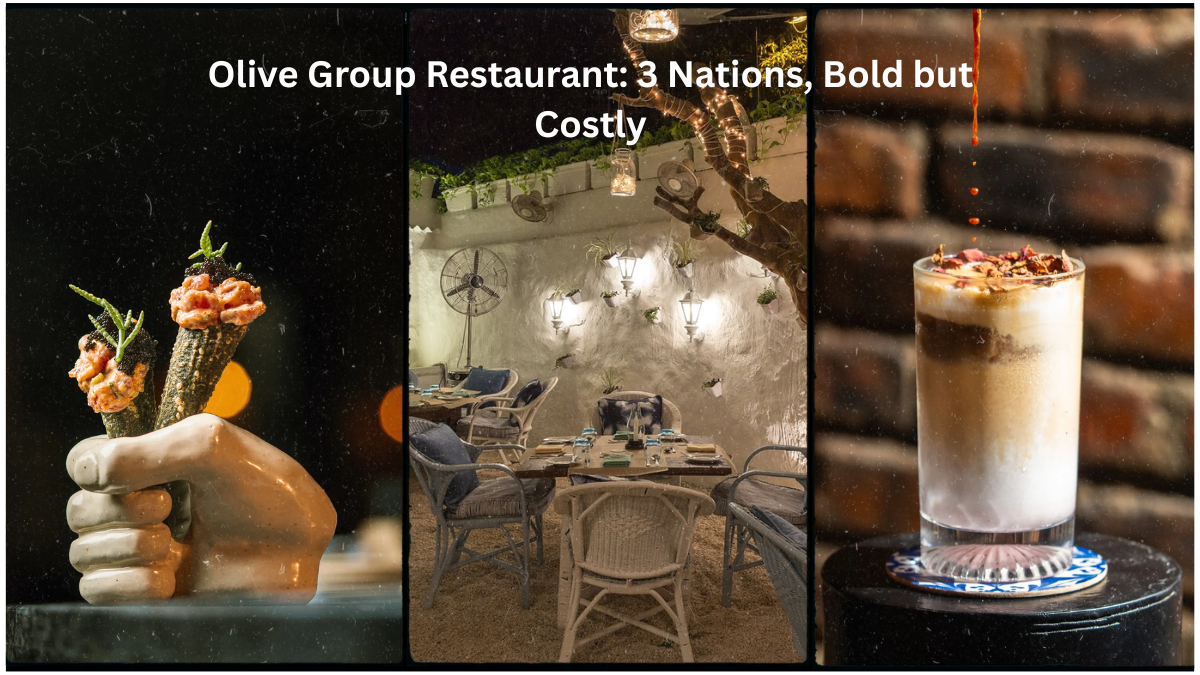
Conceptualised by Olive’s design director Sabina Singh, the 80-seater replicates the global ethos of this Olive Group Restaurant. And so dramatic murals and hand-drawn maps, busy walls with layered textures: they show us the city in three inspirations. The interiors take a cue from old world bars and brasseries – they’re dimly lit, nod to deep tones, aged books, a hodgepodge of curios and comfortable soft furnishings.
The bar is the eye-grabbing focal point, illuminated by backlit bottles and surrounded by vintage LPs. Arched bookcases, a piano hidden in a counter, exposed brick, velvet drapes, and sneaky seating carved into the stairs give it a lived-in yet lively charm. Even the crockery has a tale to tell: deep lacquered browns for Gion, sage greens for San Lorenzo, sunset coastal blues that draw their palette from Beirut.
The Drinks - Rituals in a Glass
The Olive Group Restaurant has a pretty solid bar program designed by Irene Hebrard and Prithvi Nagpal of Spill It Consultancy. Six global-inspired cocktails, two from each region, are based on local drinking traditions.
The influence of Japan surfaces in the Ginza Tiger, a miso-clarified whiskey cocktail pepped up with sesame and kokuto sugar and coffee liqueur, paired with popcorn dusted in togarashi. Midnight at an Osaka Pickle Bar is also clear and sharp, presumably reflecting somehow pickle brine but in apple and pear tones with a touch of gin added in edamame to get through the ritual.
Straight out of Beirut is The Olive Thief, a Mediterranean martini tribute, featuring vodka with curd, lemon and parsley seasoned with three drops of olive oil that represents love, possession and respect. Dance of the Beirut Bandit gives sahlab a makeover into a warm cocktail that’s like a big hug in the form of some spicy, fragrant warmth at Bengaluru evenings.
The Coffee – Slow, Thoughtful and Global
Coffee at this Olive Group Restaurant is taken as seriously as cocktails. Created by the architect Stephen Holl in coffee blends from Araku, the menu meanders from Florentine espresso bars to Lebanese qahwa and Kyoto matcha rituals. Tokyo Coconut Cold Foam, a tiramisu latte with house-made mascarpone, and table-side whisked matcha turn the everyday coffee into something special.
Food- Travel Journey
Curated by Culinary Director, Chef Dhruv Oberoi, the food menu is divided into three setts: Italian, Japanese and Lebanese with an emphasis on small plates. Both vegetarian and non-vegetarian dishes are served in each region, six of each along with desserts. This Olive Group restaurant celebrates regional nuance, lest you forget that the Korean palate shifts as quickly from neighborhood to neighborhood.
Highlights include Gion-style toro temaki, goma-ae with sesame dressing, crisp-bottomed pork gyoza, ebi furai shrimp and San Lorenzo-inspired cicchetti like burrata with mango mustard alongside Beirut favourites including torched bone marrow as well as slow-cooked goat neck in laban immo. The desserts are a continued journey, blending in-house liqueurs with sweets and rituals that reflect the traditions of each area.
Importance of Olive Group Restaurant’s
The Hood is a welcome, thoughtful addition to the dining scene in Bengaluru. As it seems more neighbourhoods will be added to the menu, this Olive Group Restaurant was created as an organism. And Singh’s mission remains evident: to deliver diners new experiences and to keep food fresh, interesting, meaningful and rooted in culture.
Final Verdict
Olive Group Restaurant once again demondtrates its capacity for churning out favourite concepts this with The Hood. This isn’t any old world menu, it’s a meticulously thought out journey in which food, drinks, design and ritual all converge with intent. The flavours are robust, the cocktail list is one of the more interesting in this city and seating is warm and inviting; a place that feels loved.
That being said, The Hood is best experienced slowly and greedily rather than wolfed.Away and the cost will comfortably push this into “special occasion” territory for some diners. Yet for those in search of something considered, immersive and novel, a member of the Olive Group delivers—making The Hood stand out in Bengaluru’s changing food and drink landscape.