
Introduction
The driest deserts in the World made me first imagine extreme heat, endless sand, and a blazing sun. But as I learned more, I realized deserts are not always hot and sandy.
Table of Contents
ToggleNow, for me, the most surprising thing about this is that the driest desert in the world is not a nice warm place somewhere, it’s actually here in Antarctica, somewhere else you shouldn’t think you’d find a desert. It is not hot at all. It is frigid and barely receives any rain or snow. It is so dry, and the winds are so strong that it is very hard for plants and animals to live there.
I was also blown away by the Atacama Desert in Chile and Peru. It is also one of the driest and hottest deserts on the planet. Parts of this desert go years without receiving any rain. It is a key place for space and scientific research because of its clear skies.
There is also the Sahara Desert in Africa, which is the world’s largest hot desert and is characterized by intense heat and little rainfall. The Arabian Desert is known for massive dunes, while the Gobi Desert, a cold desert, gets little rain and has big changes in temperature.
Driest Deserts World Ranked by Annual Rainfall
When I began my studies of the Driest Deserts, I soon realized that dryness is not only a function of heat or sand or how uncomfortable a place feels. There is one simple and scientific measure for dryness: average annual rainfall. This means that they figure out how many millimeters of rain fall in a region over a year, and compare it across multiple years to get an accurate average.
The lower the number, the drier it is thought to be. Annual precipitation can also vary from 500 mm to more than 2000 mm in most cities of the world. In the tropics, rain can pour down in masses per hour. But in the locales named among the Driest Deserts in the world, annual precipitation sometimes dips under 5 mm, and in a few instances, as low as 0 mm. Which is to say, many of these places will go years at a time, decades, and in some cases centuries without any rain that can be measured.
Another crucial term I came across during my research is “hyper-arid.” The term is applied to areas that get less than 25 mm of rain per year. And all of the deserts in this chart are at that end. Vegetation in such environments is minimal, rivers are seldom seen, and survival relies on particular strategies, be it underground water, coastal fog, or adjacent rivers like the Nile.
More intriguing, not all very dry places look the same. Some are freezing polar deserts, others scorching sand landscapes. But both can be equally dry, because the ranking is calculated on rainfall data, not temperature.
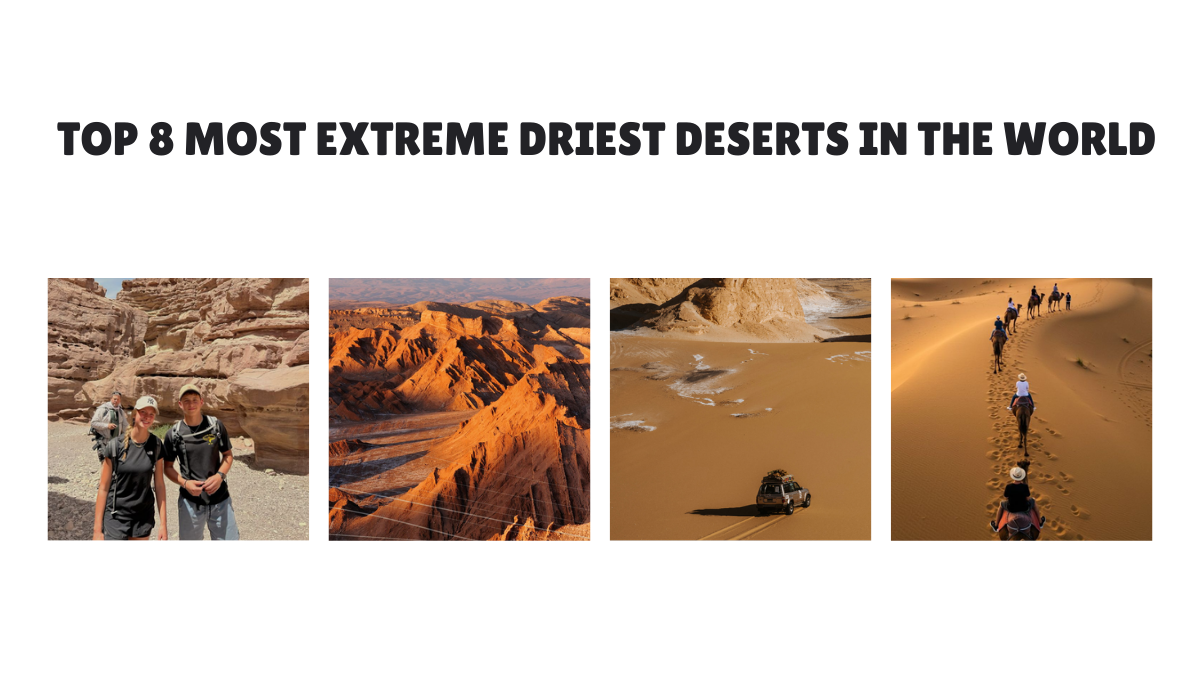
1. McMurdo Dry Valleys, Antarctica
I was honestly shocked when I first found out that the driest place on Earth isn’t a hot desert, but a cold region in Antarctica. Known as a desert, the McMurdo Dry Valleys in Antarctica is officially classified as the driest place on Earth. It totally reconfigured how I thought about deserts.
Why Is It So Dry?
As I continued my research, I discovered that the intense dryness in this area results from strong winds known as katabatic winds. These winds:
- Blow down from Antarctica’s tall ice sheets
- Travel at very high speeds
- Remove moisture from the air
- Prevent snowmelt and ice from melting
Thanks to those winds, even when snow does fall, it tends to vanish in a process known as sublimation (ice turns directly into vapor without ever becoming liquid), which is what happened here. In other words, liquid water is rarely found.
Some scientists think that some sections of these valleys have gone without measurable rain for almost two million years. That’s hard even to imagine.
Basic Facts About McMurdo Dry Valleys:
- Average annual rainfall: Nearly 0 millimeters
- Climate type: Polar desert
- Average Temperature: Very chilly, usually below freezing
- Location: Victoria Land near Ross Sea
- This place is very different from sandy deserts; its valleys are covered in rubble, glaciers, and permafrost. Here, there is no vegetation, no trees, or hardly any visible life.
A World That Looks Like Mars:
- But what amazes me more is how otherworldly this place appears. The land is:
- Dry and cracked
- Covered with salt deposits
- Surrounded by glaciers
- Completely ice-free in many areas
That’s why NASA and other organizations study the region. The dusty, cold, and barren conditions are very close to those on Mars. Research is done here to help scientists figure out how life might endure on other planets.
Can Tourists Visit?
And as a traveler, getting here isn’t easy. Other sites like those on the Driest Deserts World will by no means be this:
- Requires special permits
- Can be accessed primarily through scientific missions
- Has strict environmental protection rules
- Demands extreme cold-weather preparation
Only scientists and explorers on well-orchestrated expeditions are granted restricted access. Tourism is highly restricted to safeguard the delicate ecosystem.
Of all the places in the Driest Deserts World, this one seems to be by far the most mysterious and scientifically important. It’s a reminder about the power of nature, that it can create a landscape so dry and so cold that the very air feels otherworldly, alien.
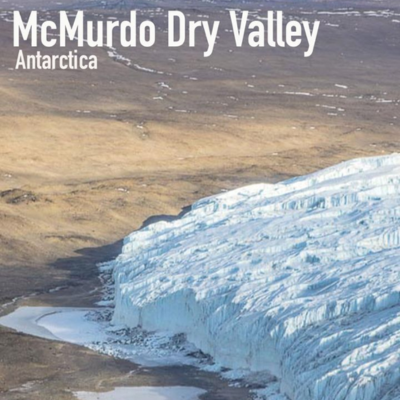
2. Atacama Desert, Chile/Peru
The Atacama Desert is known as the driest non-polar desert in the world, and when I first saw pictures of it, I genuinely thought I was looking at Mars. The landscape is dramatic, raw, and almost unreal, with red rock formations, endless salt flats, volcanoes, and wide open skies that seem to stretch forever.
Why Is the Atacama Desert So Dry?
In researching further about this place, I discovered that its incredible aridness is a result of a series of natural phenomena at play.
Andes Mountains (Rain Shadow Effect):
The great Andes Mountains rise to the east of the desert. When wet air blows from the Amazon Basin toward the west, the mountains obstruct it. The air rises, cools, and dumps its rain before getting to the desert. It is already dry by the time it gets over the mountains.
The Humboldt Current:
To the west, there is the Pacific Ocean, but that too does not rain. Cold Humboldt Current moves along the coast, and the cold air immediately above it cools. Cold air does not move upward readily, so there is no cloud condensation nor rainfall.
High-Pressure System:
- A persisting subtropical high-pressure system makes all of that very stable and dry most of the year round.
- When all these circumstances merge, the result is that we have one of the most hyper-arid deserts in the Driest Deserts World.
What Does the Landscape Look Like?
The Atacama is such a fascinating place because of the extreme biodiversity. It’s not just dunes.
The desert includes:
- Salt flats as vast as the Salar de Atacama
- Active and dormant volcanoes
- Valley File elsewhere in the text. Other rocky valleys like Valle de la Luna (Valley of the Moon)
- Geysers like El Tatio
- High-altitude lagoons with flamingos
Some sections are so alien-looking that space agencies use them to test equipment for simulating Mars missions.
Interesting facts about the Atacama Desert:
- Average Yearly Rain: Approximately 0.1 mm per year
- Type: Hot desert (non-polar)
- Where: Northern Chile and southern Peru
- Stretch: Approximately 1,600km of Pacific coastline
Some weather stations in the Atacama have also had years where no rain fell at all. Such dryness is virtually unheard of anywhere else on Earth.
Human Settlements and Culture:
- Still, people have lived in this dry place for thousands of years.
- Nowadays, towns like San Pedro de Atacama function as tourist centres. The region is also known for:
- Mining (especially copper and lithium)
- Indigenous cultures and history
- Salt harvesting
- Human beings have countered by using groundwater and by managing resources more judiciously.
Of all the places featured in the Driest Deserts World, it sure makes the Atacama feel like anyone can visit. It provides a rare opportunity to walk through one of the most extreme landscapes on the planet, and at night, to look up and see one of the clearest skies in the world.
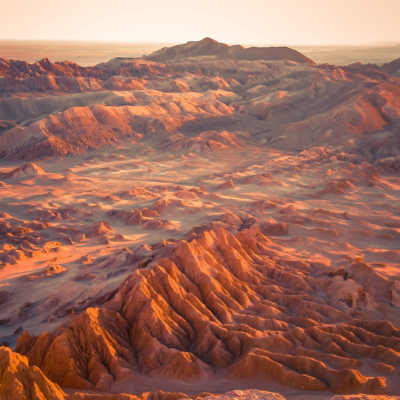
3. Arica, Chile
Arica is a commune and port city in northern Chile, known as the “city of the eternal spring”. I was shocked when I first heard of Arica. It sits right by the Pacific Ocean, but gets just 0.76 mm of rain a year. That’s not as much rain as many cities see in a single day.
For all its dryness, though, Arica is no empty desert town. It’s home to thousands of people, worksite to thousands of others, with businesses operating as they otherwise would. It made me aware of how resilient humans are, even in difficult times.
Why Is Arica So Dry?
There are a few main reasons:
- The cold Humboldt Current on the coast modifies the temperature of air masses and inhibits rainfall.
- The Atacama Desert encircles the area.
- High-pressure air systems reduce rainfall.
- And for all those reasons, good rain is vanishingly rare.
How Does the City Survive?
- Yet without rain, Arica has strategies for living and even growing.
- Coastal Fog (Camanchaca)
- I thought one of the most amazing things I learned was about camanchaca, a dense fog that comes in from the coast.
- It rolls in from the ocean.
- It does offer some hydration.
- There are also plants and systems designed to capture water from this fog.
- And that fog eventually turns into an important natural source of moisture in such a dry place.
Trade and Fishing:
- Arica is a significant port.
- Fishing supports the local economy.
- The port is a generator of business and jobs for traffic through the trading post.
- Tourism also plays a role.
- The city benefits from its proximity to the ocean, if not in rainfall, then at least in economic terms.
What Is Arica Like?
- As far as I’ve seen and read, Arica is providing:
- Beaches along the Pacific coast
- Desert landscapes nearby
- Near tropical, warm and sunny most of the year
Historical and cultural sites:
Due to its constant and agreeable temperatures, it is sometimes referred to as the “City of Eternal Spring.”
Arica is where I am reminded that dry does not have to mean empty. In one of the driest places on Earth, life goes on, communities develop, and people construct a future.
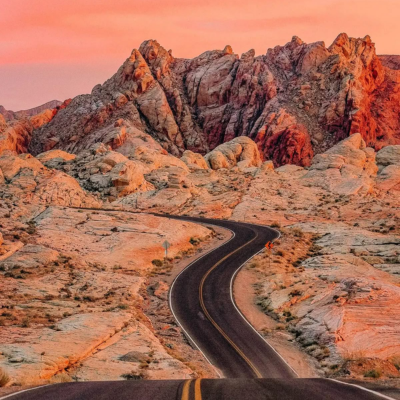
4. Aswan, Egypt
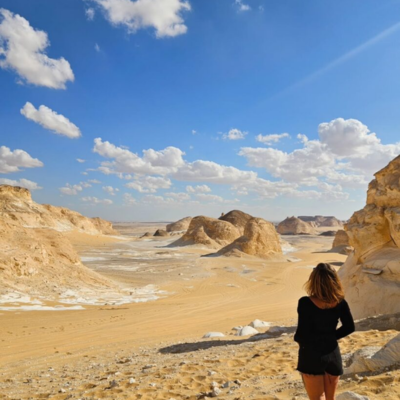
Aswan is located on the historic Nile River in Egypt’s south. In my mind, Aswan is a quiet little city nestled in the golden desert with the blue Nile moving through it peacefully. What’s really impressive about Aswan is the fact that it thrives in what could possibly be one of the driest places on earth.
Why Is Aswan So Dry?
There are a few reasons that it very rarely rains in Aswan:
- Namibia is situated in the Sahara Desert region.
- No rain is possible because of the subtropical high, while there’s no cloud in depth.
- It is dry, with some exceptions for moist belts along its edges, and nowhere near major sources of moisture like the oceans.
- As a result, humidity is not very high, and the air tends to feel dry and warm.
Basic Climate Facts About Aswan
- Average Annual Rainfall: 0.86 mm/year
- Climate Type: Hot desert climate
- Sunshine: More than 3,800 hours of sunshine per year
- The Nile: A Matter of Life or Death
Without the Nile:
- There would be no farming.
- There would be no water you could count on.
- It would be virtually uninhabitable by humans.
The rich green waters of the Nile contrasted strangely with the yellow desert. On one side, it’s palm-trees and crops. On one, water in biblical proportions. And that’s a contrast I think is really, really dramatic and beautiful.
For me, Aswan is the ultimate example of how nature and human life both revolve around one singular natural force. Its fertility and the contrast that it offers to the surrounding desert make it one of the most striking instances of survival in upper arid regions.
5. Luxor, Egypt
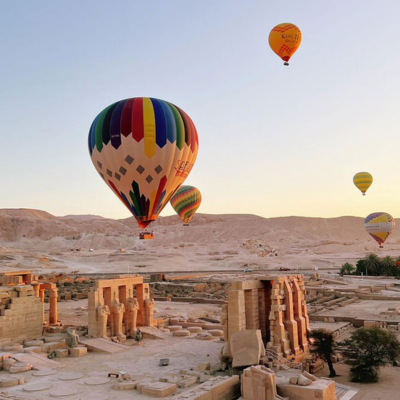
Luxor is another amazing city in the world, Driest Desert Places. When I think of Luxor, my first thoughts are not just of dryness but history, mystery, and ancient civilization. It’s one of the most historically wondrous places on earth, and its arid climate has gone a long way towards preserving all that it contains.
Why Luxor Is World Famous?
Luxor is known as the “world’s greatest open-air museum.” As I reach back into its past, I am stunned at how much has persisted.
Valley of the Kings:
- Valley of the Kings is one of the most renowned archaeological sites in the world.
- Tomb for some old Egyptian kings
- Tombs hewn into the desert hills
- Wall paintings that are still visible today
- The arid air had helped protect these paintings for thousands of years.
Ancient Temples:
And Luxor’s breathtaking temples, like:
- Karnak Temple
- Luxor Temple
- These huge stone buildings have endured hundreds of years because there’s almost no rain to break them down.
- Historical Tombs and Artifacts
The region is filled with:
- Decorated burial chambers
- Ancient hieroglyphics
- Well-preserved statues
- Archaeological discoveries are still being made
In more lush areas, rain, moisture, and the growth of plants can slowly topple ancient buildings. But the extreme dryness of Luxor has served as a kind of natural shield.
Why Luxor Is So Dry:
- Luxor is situated on Egypt’s border with the desert, near the River Nile. The dryness is caused by:
- Its position in the Saharan desert band
- High-pressure systems that block rainfall
- Proximity to large moisture sources
Due to this, there is an extremely low humidity, and the process always occurs in a dry setting.
When I imagine Luxor, I see:
- Golden desert hills
- The blue Nile River runs past the city
- Palm trees along the riverbanks
- Bright sunshine almost every day
The difference between the green Nile Valley and the barren desert mountains is really quite startling.
It shows that even in one of the driest places on Earth, human civilization not only found a way to survive but also built monuments that continue to awe the world thousands of years later.
6. Ica, Peru
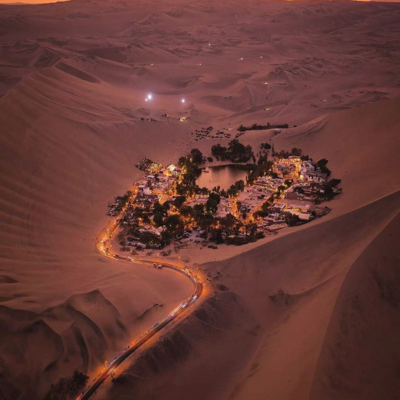
Ica lies in southern Peru, close to the dry Atacama region. When I first read about Ica, I was curious because it is part of one of the driest areas on Earth, yet it is also known for a beautiful oasis.
Why Ica Stands Out in the Driest Deserts World
Luxor is known as the “world’s greatest open-air museum.” As I reach back into its past, I am stunned at how much has persisted.
Valley of the Kings:
- Valley of the Kings is one of the most renowned archaeological sites in the world.
- Tomb for some old Egyptian kings
- Tombs hewn into the desert hills
- Wall paintings that are still visible today
- The arid air had helped protect these paintings for thousands of years.
Ancient Temples:
And Luxor’s breathtaking temples, like:
- Karnak Temple
- Luxor Temple
- These huge stone buildings have endured hundreds of years because there’s almost no rain to break them down.
- Historical Tombs and Artifacts
The region is filled with:
- Decorated burial chambers
- Ancient hieroglyphics
- Well-preserved statues
- Archaeological discoveries are still being made
In more lush areas, rain, moisture, and the growth of plants can slowly topple ancient buildings. But the extreme dryness of Luxor has served as a kind of natural shield.
Why Luxor Is So Dry:
Luxor is situated on Egypt’s border with the desert, near the River Nile. The dryness is caused by:
- Its position in the Saharan desert band
- High-pressure systems that block rainfall
- Proximity to large moisture sources
- Due to this, there is an extremely low humidity, and the process always occurs in a dry setting.
The Landscape and Atmosphere:
- Golden desert hills
- The Blue Nile River runs past the city
- Palm trees along the riverbanks
- Bright sunshine almost every day
The difference between the green Nile Valley and the barren desert mountains is really quite startling.
It shows that even in one of the driest places on Earth, human civilization not only found a way to survive but also built monuments that continue to awe the world thousands of years later.
7. Wadi Halfa, Sudan
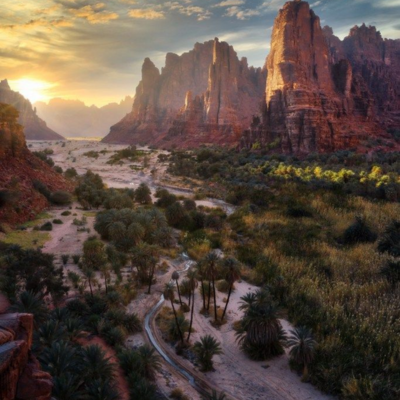
Gallery Wadi Halfa is in the north of Sudan, near the Egyptian border and Lake Nubia (Lake Nasser). When I read about Wadi Halfa, I understood that it’s one of the wildest and remotest places in Driest Deserts World.
Why Is Wadi Halfa So Dry?
There are several reasons why this area is so dry:
- It is located far into the Sahara Desert region.
- It is remote from oceans and large moisture sources.
- A powerful subtropical high-pressure system obstructs the cloud formation.
- The region is dominated for most of the year by dry continental air.
With this two-pronged condition in place, the formation of rain clouds is infrequent, and moisture scarcely finds its way to this arid region.
Climate Basics About Wadi Halfa:
- Average Rainfall: About 2.45 mm annually
- Climate Type: Hot desert (hyper-arid)
- Summer Temperatures: Often above 40°C
- Humidity: Historically low all year round
Rain is very rare here. Some years, there’s really no rainfall to speak of at all. The sky is generally clear, with strong sunshine.
Extreme Weather Conditions:
- Wadi Halfa is particularly punishing not for lack of rain alone, but for the general climatic situation.
- Very High Temperatures
During summer:
- Temperatures can cross 45°C.
- You feel hot, since the sun is very strong.
- Shade becomes extremely important.
- Strong Desert Winds
- And hot winds blow in the open desert.
- Sandstorms can occur.
Dryness can be further exacerbated by the evaporation of surface moisture that is facilitated by wind.
- Extremely Low Humidity
- The air feels dry and sharp.
- Sweat evaporates quickly.
- Your risk for dehydration is very high without proper hydration.
Unlike places like Ica or the Atacama that draw adventure tourists, there’s a different sense of remove and fewer hard-sell aspects to Wadi Halfa. It is the sort of place that has lessons to impart about endurance, resilience, and the force of nature.
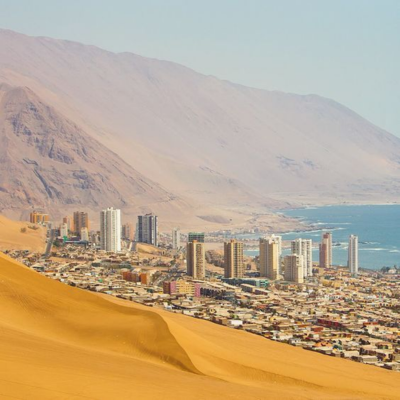
8. Iquique, Chile
Iquique is another fascinating coastal city in northern Chile, located along the Pacific Ocean. Despite being beside the sea, it is one of the driest cities in the world.
Why Is Iquique So Dry?
Iquique is incredibly dry due to a mixture of natural geographic and oceanographic reasons:
The Humboldt (Peru) Current:
- There is a cold ocean current that runs along the Chilean coast.
- It chills the air over the sea.
- Cool air holds less moisture.
- That keeps heavy rain clouds from developing.
Subtropical High-Pressure System:
- Prolonged and strong high-pressure systems over that shoulder season prevent essential rains and keep the fire conditions going for longer than usual,” he added.
- High pressure pushes air downward.
- The sinking air prevents the formation of clouds and rain.
The Atacama Desert:
- It is near the Atacama Desert, one of the driest parts of the planet.
- Naturally, after all, it barely rains in the desert.
The Andes Mountains:
- Moisture evaporating in the Amazon Basin has difficulty reaching the coast.
- The moisture is blocked by the Andes, generating what is known as a “rain shadow” effect.
Temperature Inversion:
- Cold air that is near the ground becomes trapped beneath a layer of warmer air above.
- This prevents air from ascending and creating rain clouds.
Why It Rarely Rains:
- The cold current stabilizes the atmosphere, reducing upward air movement.
- Without rising warm air, rain clouds cannot form easily.
- The region often experiences coastal fog (called camanchaca) instead of rainfall.
- High-pressure systems over the Pacific further block precipitation.
Final Thoughts
Exploring the Driest Deserts World has changed my perspective on our planet. I thought deserts were all one kind of place (hot and sandy) until I looked into this a bit. Now it feels to me that dryness has many faces: glacial valleys, coastal cities, prehistoric riverbeds, and hyper-arid environments.
The freezing winds of the McMurdo Dry Valleys to the sunburnt sands of the Atacama Desert remind me time and time again how resilient and diverse Earth actually is.
Some of these places are an adventurer’s dream. Others are more useful for scientists. But they all tell us something important about survival, climate, and adaptation.
Visit for more: https://travellergossip.com/
FAQs: Driest Deserts in the World
1- What is the driest place on Earth?
The McMurdo Dry Valleys in Antarctica are considered the driest place on Earth.
2- What is the driest hot desert?
The Atacama Desert in Chile and Peru is the driest hot desert.
3- Can people live in these dry places?
Yes, cities like Arica, Aswan, Luxor, and Iquique have permanent populations.