
Introduction
Small towns in Spain remind me why travel is more than sightseeing, it’s about feeling, discovering, and connecting with life at a slower pace. Unlike the bustling streets of Madrid or the nocturnal bars of Barcelona, Spanish villages follow their own time. Here you wake up to the smell of freshly baked bread and freshly brewed coffee, slow down to a siesta in the afternoon, and every stone or corner has at least one tale from hundreds of years ago.
Table of Contents
ToggleOver the years, I’ve drifted through towns, clung to cliffs, nestled against mountains, and tumbled down to the sea. They all left an impression on me, and not just because of their views or food or architecture, but because they made me stop and savor the moment. In that line, I thought it would be fitting to share 5 of the most memorable small towns I’ve had the pleasure 5 small towns i Spainvisited while traveling through Spain, places that remind me (and should you too) what this country is all about.
Whether you’re the lounging type or like to take in the dozens of cultural attractions, these towns are more than just things to see; they’re memories made. From fairy-tale castles to seaside havens, these tiny towns in Spain boast something for everyone looking to enjoy an escape from city life, with locals who will welcome you into their homes.
What Are the Must-See Small Towns in Spain?
When I imagine small towns in Spain, some places spring immediately to mind, every one of them special, every one making an impact. These towns aren’t just points on a map; they’re experiences that linger with you long after you depart. During my travels, I’ve strolled down cobblestone streets where the sun shines on whitewashed walls, hiked hills with sweeping views of the surrounding countryside, and lingered in peaceful plazas where locals sip coffee or tapas while observing the world pass by.
What does continue to amaze me about these villages is how they still retain so much of their history, culture, and character despite being in a country visited by millions every year. And the very unique details were what I remembered about every town: the smell of fresh bread from a corner bakery, or elaborate stonework on an ancient cathedral, or children playing and laughing at high volume in tight spaces off a narrow alley. It’s the little things like these that you just don’t get in a city.
One of the things I love most about Spain’s small towns is how they remind you to take a moment and enjoy life. The stores are closed in the afternoons(siesta), markets only open in the morning, and evenings are ideal for casual walks under a golden sunset. I noticed that the rhythm of those towns helps you really get to know a place, not just see it, but feel it.
1. Segovia, Castile-León: A Fairy-Tale Escape
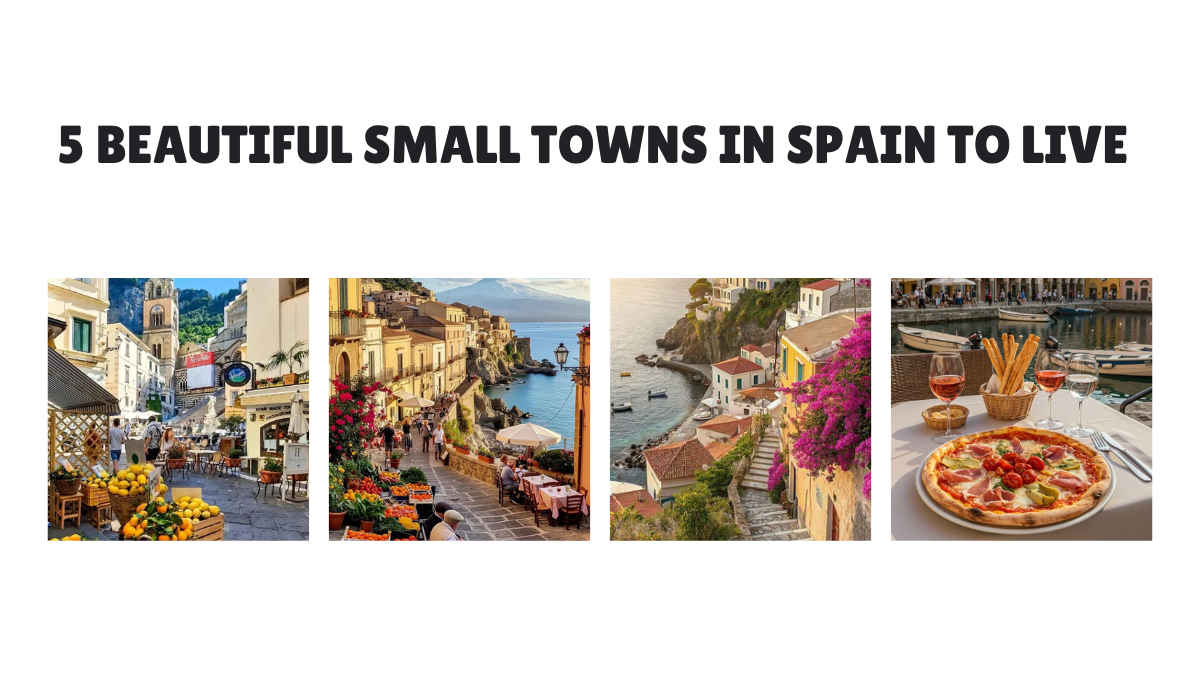
Whenever I think of pretty little towns in Spain, Segovia always springs to mind. Located in the region of Castile-León, this town is just 90km (56 miles) from Madrid and therefore an easy day trip by train, bus, or car! But despite being so close to the capital, Segovia feels like a whole other world, one of history, architecture, and charm.
What does it stand for:
The Alcazar of Segovia:
- Indeed, this castle is the epitome of fairy-tale fantasy, complete with tall turrets, stone staircases, and mighty halls.
- Local lore has it that Walt Disney took them as inspiration for some of his most famous castles.
- Walking around the Alcazar, I was sure I could hear medieval banquets reverberating down its long corridors, feel knights in armor pointing one another to stained-glass windows through which their families once roamed.
- Don’t overlook the castle’s tower, with views out over the entire town and surrounding countryside.
Roman Aqueduct:
- The Roman Aqueduct of Segovia is one of the most impressive examples of ancient engineering in Spain.
- It was constructed around 50 BC and runs over 800m long with 167 arches.
- Standing under the enormous stone arches, I marveled at how good it still looks after more than 2,000 years.
- It’s a UNESCO World Heritage site and takes its visitors back to Spain’s Roman past.
Segovia Cathedral:
- The last Gothic cathedral built in Spain, known as it’s found on the town’s central plaza, Plaza Mayor.
- The cathedral is huge, with high spires crowded with amazing stained glass and carved altars.
- And in fact, inside, the calm eclipses all your senses to the crowded chaos just outside.
- I enjoyed wandering down the surrounding streets and visiting the cathedral from various angles — it was like stepping into a different time.
Strolling Through the Town:
- Segovia is perfect for wandering. Its streets are lined with narrow, cobblestone, and quaint shops, cafes, and traditional bakeries.
- New Orleans grinds to a halt for siesta in the early afternoon, so mornings and late afternoons are the prime time to explore.
- I liked to detour into local cafés for coffee and pastries, as I watched daily life unfold on the tranquil streets.
Food and Local Delicacies:
- And, after all of that, Segovia is a place famous for cochinillo asado, which is tender and crispy and just freakin’ delicious.
- Other local specialities are judiones de La Granja (a type of bean stew) and pastries such as ponche Segoviano.
- I’d suggest dinner at a family-run restaurant in the old town for an authentic flavor and cozy atmosphere.
Practical Tips for Visiting Segovia:
- Transportation: A high-speed train ride from Madrid takes about 30 minutes; buses take approximately an hour. A car is helpful if you want to visit nearby towns like La Granja.
- Timing: Arrive in the morning and see the aqueduct and Alcazar before they fill up with tourists, lunch leisurely, then the cathedral and old streets.
- Footwear: Comfortable shoes are essential, cobblestone and a few steep streets give you a reason to wear those stronger walking shoes.
- Photography: The Alcazar tower, along the aqueduct, and from the viewpoint next to the cathedral are the best points for photos.
Why Segovia Stole My Heart:
What I loved most about Segovia is that it slams together history, architecture, and the real daily lives of people into one. Whether you’re staring in awe at ancient Roman engineering, imagining yourself living in a medieval castle or sipping coffee on an uncrowded plaza, Segovia is all about slowing down and drinking it all up and feeling connected to centuries’ past. For me, it wasn’t just a day trip but rather a venture into another age of a Spanish town that lingers in the memory.
2. Cudillero, Asturias: A Hidden Coastal Gem
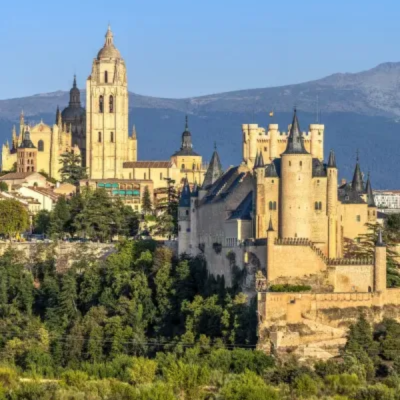
The first time I stumbled into Cudillero, it was as though I had happened upon this jewel of Spain’s northern shore. This tiny fishing village in Asturias is built on the cliffs above the Atlantic Ocean, with houses piling up like a rainbow spilling down. The sleepy, charming allure of the village immediately had me slowing down, taking a deep breath, and soaking in the amazing views.
What does it stand for:
Picturesque Harbor and Colorful Streets:
- The village revolves around the harbor, where small fishing boats bob in the waves and seagulls swoop overhead.
- As I twisted my way through the twisting, narrow streets, each was like a different street – part looking out to the sea, others crowded by pastel-coloured buildings.
- Flowerpots are overflowing with blossoms, and wrought-iron balconies are common, making the town feel like a living postcard.
- The streets’ configuration, terraced along the cliffs, gives that feeling of walking through a labyrinth full of surprises at every corner.
Natural Beauty and Panoramic Views:
- The cliffs and hills around the town of Cudillero make for great viewing points from which to look down on the ocean and village.
- I hiked a little path above the town to watch the sunset over the Atlantic, with waves crashing against the cliffs in a spectacle I’ll never forget.
- On cloudy, misty, or rainy days, the village is ethereally mysterious, and it feels like time has stopped just for you.
- The sea, the dramatic cliffs, and the brightly colored houses make for photo moments or silent reflection.
Culinary Delights:
- Cudillero is known for seafood, including octopus, clams, and locally caught fish.
- I had to try it. I couldn’t resist dining at the little family-run restaurant by the harbor; those flavors were fresh, simple, and unforgettable.
- Another local specialty is fabada Asturiana, a robust bean stew with chorizo and pork that’s perfect for cold or rainy days.
- Seafood or fabada with a glass of Asturian cider, poured from high up traditionally, were authentic experiences.
Relaxed, Slow-Paced Lifestyle:
- The village is ideal for long, slow walks along cliffside paths or through quiet alleyways.
- Life in Cudillero is slow-paced: neighbours talking outside their houses, children playing in the streets, and fishing boats going out to work for the day.
- It is an ideal place to view a traditional fishing life, and one can feel more ‘connected’ with a slower, authentic way of life.
- For them, the quiet rhythm of the village was a respite from the bustle of larger Spanish cities.
Practical Tips for Travelers:
- Go There: Cudillero is about 80 km (50 miles) from Oviedo or Gijón. If you’re traveling in your own car, there’s the freedom to tour neighboring coast resorts; buses run between the town and main cities of the Asturias region.
- When to Go: Spring and early fall provide mild weather, fewer visitors, and great natural lighting for photos. Summer is lighter and not yet untamed.
- Footwear: Absolutely wear comfortable shoes; the streets are cobblestoned and hilly in places.
- Photography: whether it is of the colorful houses, the harbor, or panoramic cliffs, from morning to sunset, is ideal.
Eating You can’t go wrong at the small, family-run places for real vegetables, homestyle seafood, and Asturian cooking.
Why Cudillero Stole My Heart:
- Cudillero taught me that some of the most memorable towns are hardly the busiest or even the most renowned.
- Its charm is in the balance of sea, sky, and village life, combined with hundreds of years of history and culture.
- Strolling its streets, sampling local dishes, and soaking up the sights gave me a sweet taste for northern Spain’s coastal lifestyle.
There is something about Cudillero that stays with you, long after you’ve visited, a hidden gem of Spain if there ever was one.
3. Setenil de las Bodegas, Andalucia
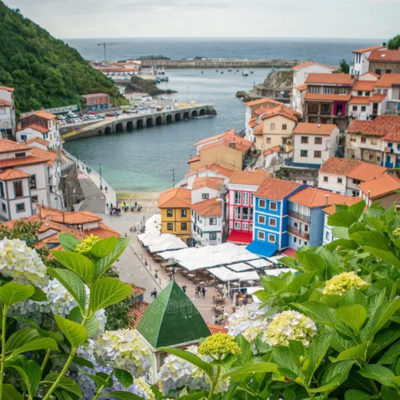
Setenil de las Bodegas is one of the most peculiar pueblos in Spain. As soon as I arrived, the town hit me by surprise. This was not something I had seen anywhere before; all the houses and shops (and even some eateries) are built directly into large rock overhangs, which become part of nature and architectural structure.
What does it stand for:
Unusual Architecture:
- Most of the homes are hacked into or under giant rock overhangs, making natural roofs and cool streets.
- The Río Trejo gently flows through the village, providing a tranquil undertone to what is an already unique setting.
- I walked these streets with a sense of awe at the creativity and civic enterprise embodied in those who built and inhabited this place over centuries.
- Stone, whitewashed walls, and rocky ceilings make every turn seem like a discovery.
Charming Streets and Plazas:
- Setenil’s streets are twisting and narrow, just the way they tend to be in Andalucian villages: white walls with colourful flowerpots and small, tucked-away plazas.
- I whiled away hours getting lost, slipping inside tiny artisan shops, pausing to admire handmade crafts, and sitting at small cafes nestled into crevices in the rock.
- The village itself is tranquil, and thanks to the streets being naturally shaded by rock, it remains cool even on baking Andalusian days.
- On every block, something is charming, a little fountain, a flower-laden balcony, or a quiet plaza on which to sit and people-watch.
Food Experiences:
- A clusterfuck of local food here in Setenil. Manchego, olives, and warm bread with jamón ibérico; tapas are the thing here, and I couldn’t resist.
- Sitting in a little restaurant hollowed out under the rock ceiling, I adored hearing the murmurs ricochet around it, made, of course, for a snug and singular meal.
- Having tapas with a glass of local wine added to the experience, and the food felt like it belonged in the town, simple, fresh, and real.
Exploration Tips:
- The town is compact and walkable, but some streets are uneven with steps carved into the rock, so pack comfortable footwear.
- Setenil is great as either a half-day or full-day trip, and it’s lovely to pair with nearby Ronda, just a 30-minute drive away.
- Mornings and late afternoons are the perfect times for walking the main streets (cobbled pathways), taking photos, and soaking up the peaceful atmosphere before the small cafes get full.
- And don’t forget to poke around the streets above for grand views of the town, where white houses tumble down cliffs into a valley below you.
Why Setenil de las Bodegas Lingers in My Mind:
- Setenil is remarkable because it is outlandish without being pretentious. It doesn’t resort to grandeur or crowds to make an impression; it merely intermixes natural stone with human architecture in a manner that feels outside time.
- I suddenly loved human creativity, history, and nature all at once.
- With its small size, tranquillity and many surprises (in addition to due delights of the picaresque past in Spain), this is perhaps my favorite small town in that very intriguing country.
4. Valldemossa, Balearic Islands: Peace and Serenity in Mallorca
Valldemossa, in the Tramuntana Mountains of Mallorca, is a village that made me want to stop. Nestled among gentle hills and framed with verdant greenery, it’s a quintessential island village that is full of character yet tranquil.
What does it stand for:
Carthusian Monastery:
- The village’s most well-known attraction is the Carthusian Monastery, where composer Frédéric Chopin spent the 1838 winter.
- As I took a stroll around the silent chambers and stone courtyards of the monastery, it looked like the same contemplative silence that must have made Chopin look inward while he composed.
- The rooms, gardens, and chapels are in good condition, providing a window into the lives of monks and artists who inhabited them centuries ago.
- I spent a long while wandering slowly through the monastery, almost able to envision the stories and sounds that would have once brought the walls to life.
Palace of King Sancho:
- This royal residence is located in the middle of Valldemossa and tells the tale of Mallorca’s past and its buildings.
- The palace grounds include trimmed gardens and terraced areas with panoramic vistas of the village and surrounding mountains.
- Wandering around the palace and its environs gave me a sense of the town’s royal history, and the way history is embedded in every stone or flowerbed.
Cobblestone Streets and Local Life:
- Valldemossa’s streets are narrow and hilly, and many are cobblestoned; every walk feels like a little adventure.
- I enjoyed strolling the boutiques, small cafes, and artisan shops, pausing frequently to examine local crafts and savor the quiet charm.
- Any corner turned included a sneak peek, be it a balcony filled with flowers, a quiet plaza, or a narrow street spill into the mountains.
- That the village sparkles is not only a result of its buildings, but also the gently paced and restful rhythm of local life, which would please even the most leisurely traveler.
Culinary Highlights:
- Then try local pastries, notably coca de patata, a soft, sweet bread made only in the village.
- Another highlight is the fresh bread baked in small local bakeries, fantastic with coffee while watching village life.
- Tumbet (a vegetable casserole with a layer of potatoes, peppers, and aubergine) served in cosy village eateries is one of the typical Mallorcan foods.
- Eating here feels close and real; it’s not just dinner, but an opportunity to sample local ways of doing things.
Travel Tips:
- Getting There: Valldemossa is an approximately 20-minute drive from Palma de Mallorca. Hiring a car brings the nearby Tramuntana mountains within easy reach.
- When to Go: It is best visited in spring or early fall, when the cool weather outnumbers the tourists.
- Shoes: Comfortable for walking around the hilly cobblestoned streets.
- Photography: Iconic place to get some beautiful pictures from the Monastery, Palace, Village Streets, and the mountains.
Why Valldemossa Left an Impression:
- Valldemossa introduced me to the serene Mallorca, where history, music, and nature live in perfect harmony.
- It’s a village where you can take your time over coffee, walk slowly through the streets, and soak in the mountains feeling utterly at ease.
For me, Valldemossa is indicative of the fact that there are some towns you have to take your time through and enjoy fully and leisurelyeverything from every moment to every view.
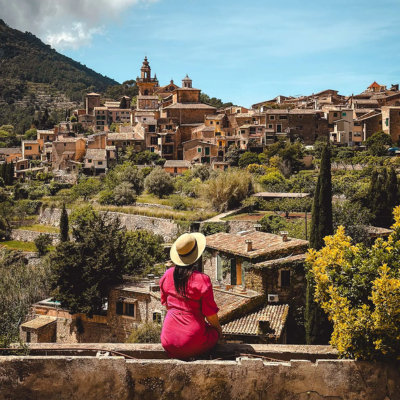
5. Albaraccín, Aragón: Step Back in Time
Finally, Albaraccín in Aragón is one of the most historic and visually stunning villages in Spain. Perched on a cliff, its reddish buildings contrast beautifully with the surrounding painted hills, creating a medieval postcard-like view.
What does it stand for:
Historic City Walls:
- The medieval walls were started in the 11th century and built to defend the town against invasions.
- I wandered the stone paths of the walls, taking in views of the valley and river below.
- I could only stand there and let my mind conjure images of medieval soldiers protecting the town hundreds of years ago.
- Towers and fortified stretches still stand strong, reminders to visitors of Spain’s Moorish and Christian history.
- But the walls are not mere ruins; they feel inhabited with stories of battle and life and resilience.
Medieval Streets and Architecture:
- The streets are cobbled, steep, and winding up and down the valleys.
- All of the houses are painted deep reds, pinks, and ochres that make it an unforgettable town.
- The balconies are wooden with carved doors, festooned with local atmosphere and charm.
- The main square has a tranquil, historic feel and is a great place to sit and watch local life.
- The cathedral is a mixture of architectural styles, from Gothic to Baroque, which reveals the history of the town over centuries.
- In every direction, there is another discovery: a secret staircase, a nifty archway, or a quiet private courtyard bursting with flowers.
Archaeological Sites and Ancient History:
- The area around Albarracín shows signs of human habitation that stretch back thousands of years.
- Archaeological remains of Roman aqueducts illustrate the level of sophistication in ancient societies.
- The adjacent archaeological sites feature post-Palaeolithic rock art and artefacts, evidence that the land has always been dominant for thousands of years.
- These visits are what have helped me to understand Spain’s history, which is long and layered.
- It’s humbling to imagine that people have walked these lands for thousands of years before we did.
Local Experiences and Cuisine:
- Small family restaurants serve traditional, generous meals.
- I ate lamb stew and grilled meats, fresh-baked bread that felt as reassuring as the steep streets were disorienting.
- Local ingredients are unassuming but full of flavor, in the spirit of the mountain culture that pervades the region.
- I also enjoyed talking to local artisans who make handcrafted goods and perpetuate traditional skills.
- Listening to their stories, the town became personal and welcoming.
- Eating in Albarracín feels real and warm, like you’re sharing a meal in someone’s home.
Practical Tips:
- Shoes: You will want to put on shoes that are strong and comfortable. The streets are hilly and bumpy, often slippery.
- Best Time for Photos: The morning light causes the red buildings to pop nicely.
- Evenings: Best enjoyed for a laid-back dinner and to see the sunset over the hills.
- Nature Lovers: The surrounding mountains and river trails are great for hiking and exploring.
It’s more than a town; it is, quite literally, a living museum in which each stone has a story to tell. My visit to Albarracín was a stark reminder that there are places out there that not only do they show you history but also make that history come alive!
Final Thoughts
Visiting these small towns throughout Spain has been by far one of the most enriching experiences from my travels. Every town is different, some on cliffs, others by the sea, a few nestled in mountains, but all have the sense of a slower, more meaningful way of life. But if you’re planning a trip, allow time to wander streets without a clock ticking, to indulge in regional fare, and to embrace the history and natural authenticities these villages offer.
Small towns in Spain remind us that travel is not about just ticking landmarks off your list, it’s about getting to know a place, its people, and their stories. There’s the fairy-tale city of Segovia, the tranquility of Cudillero on Spain’s northern coast, Setenil’s craggy streets, Valldemossa perched quietly in Mallorca’s hills, and Albaraccín inscribed within medieval walls; one can’t help but become a devoted admirer for life.
Visit for more: https://travellergossip.com/
FAQ: Small Towns in Spain
1- What is the best time to visit these villages?
Spring and fall are ideal for pleasant weather and fewer crowds. Summer can be hot, especially in southern Spain, and winter can be quiet but charming.
2- Are these towns kid-friendly?
Yes! Segovia and Valldemossa are particularly enjoyable for families, while towns like Cudillero and Setenil are more suited for leisurely exploration.
3- Can I combine multiple towns in one trip?
Absolutely. For example, Segovia is perfect as a day trip from Madrid, Setenil pairs well with Ronda, and Valldemossa is easily accessible from Palma de Mallorca.