
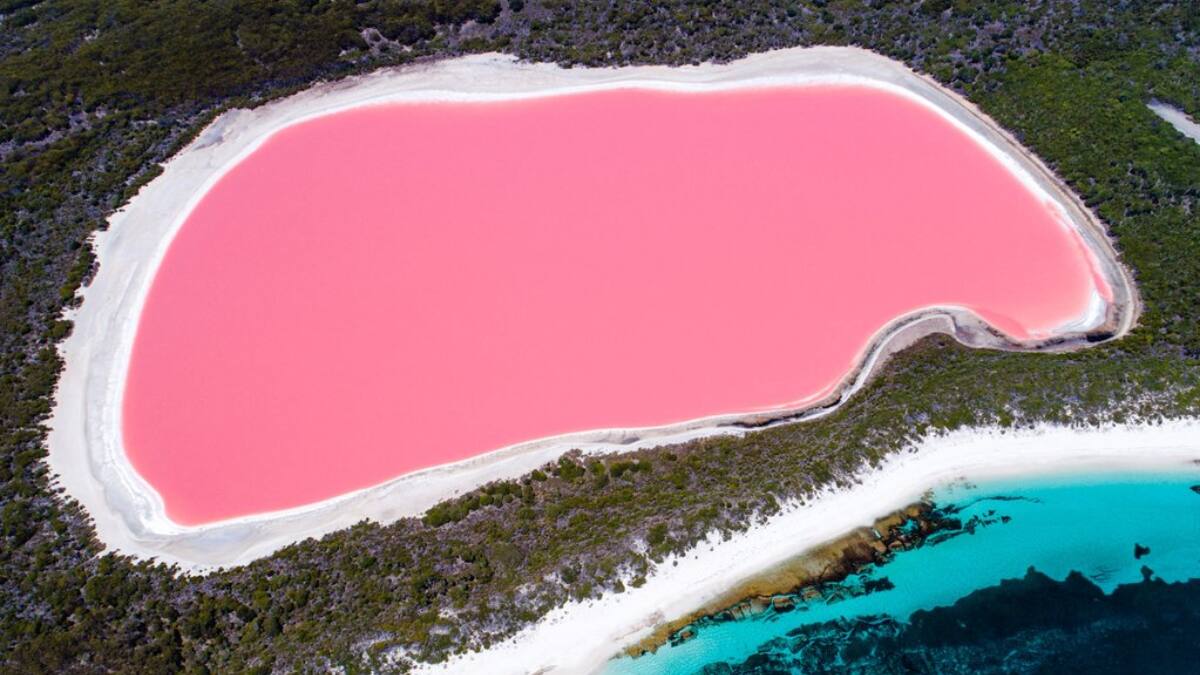
Pink lakes look like they are straight out of a fairy tale, but they are very real. Their bright pink color comes from a mix of heat, salt, and tiny microorganisms. When water levels drop and salt increases, algae and bacteria produce pigments that turn the water from light pink to bright pink. Some lakes even change color with the seasons, shifting between blue, white, and pink. These lakes are found in 22 countries, including Australia, Bolivia, India, and the USA. However, scientists warn that these lakes may become more common as climate change makes hot and dry conditions more frequent.
Here are 15 pink lakes you must see:
-
Lake Hillier, Australia – Bright pink water that stays pink even in a glass.
-
Hutt Lagoon, Australia – Changes from bubblegum pink to lilac and red, especially beautiful at sunset.
-
Lake Grassmere, New Zealand – Produces a lot of salt during summer.
-
Lake Retba, Senegal – Turns pink in the dry season and supports salt harvesting.
-
Lake Natron, Tanzania – Home to flamingos; predators avoid its harsh waters.
-
Salinas de Walvis Bay, Namibia – Pink salt pans and a habitat for flamingos and pelicans.
-
Great Salt Lake (North Arm), USA – Turned pink after salinity increased in the 1950s.
-
Keālia Pond, Hawaii – Recently turned pink in 2023; scientists are studying it.
-
Las Coloradas, Mexico – Pink lagoons that change with salt production and weather.
-
Laguna Colorada, Bolivia – High-altitude lake that hosts flamingos.
-
Las Salinas de Torrevieja, Spain – Artificial pink lakes used for salt production.
-
Lake Lemuria, Ukraine – Very salty, even more than the Dead Sea.
-
Lake Tuz, Türkiye – Large lake and protected flamingo habitat.
-
Lonar Lake, India – Turned pink in 2020; color changes with weather.
-
Lake Elton, Russia – One of Europe’s largest mineral lakes, used for health treatments