
Rituals to observe over 4 daysWhat is Pongal?Pongal is celebrated annually from January 14-17 by people in Tamil Nadu, Telangana and Andhra Pradesh, and has been celebrating the occasion for centuries as one of South India’s oldest harvest festivals. The festival is primarily associated with happiness, family reunions, prayers and of course food. So closely is Pongal associated with its eponymous dish—also, conveniently enough, called pongal—that many paatis and patta naadaus wonder: did the festival predate the food or did the food spark off a celebration?
To address this interesting query, we have to delve into the history, significance and traditions associated with Pongal.
What Is Pongal All About?
Ultimately at its core, Pongal is a celebration of the harvest. It is the season when farmers harvest rice, the principal crop of South India. The festival is a form of showing gratitude to nature, the sun, rain and soil which gave them good harvest. It also venerates cattle, which are crucial to farming — they plough the fields and support crop growth.
Pongal falls around the same time as other South Indian harvest festivals such as Makar Sankranti, Lohri, Bihu, and Bhogi. The meanings may vary by region and name, but the fundamental notion is shared across cultures: one of being thankful for an abundance.
What Does the Word ‘Pongal’ Mean?
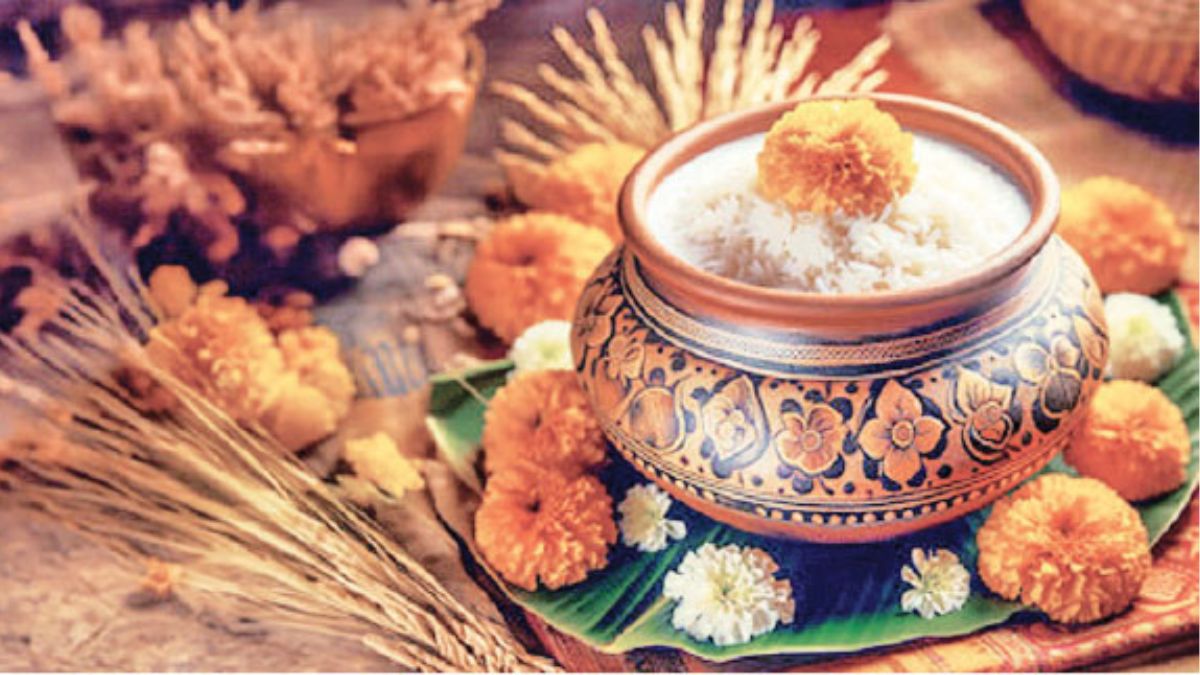
The name “Pongal” comes from the Tamil word “pongu,” which means to boil over. This meaning is deeply symbolic. Milk is boiled in a new earthen pot until it spills over during the festival. This is an act of abundance, happiness and good luck. In the case of an overflowing pot is considered to symbolizes that money will flow into your home.
This act is so significant, that the festival itself is named after this symbolic gesture, which demonstrates how food and celebration are intrinsically tied together.
Pongal, a Dish That’s Simple, Sacred and Symbolic
Pongal is prepared with freshly harvested rice, milk and jaggery. In certain variations, either ghee, cashews, lentils or peppercorns are included. The food is made outdoors, typically in the open sun, and close to family.
The first serving of Pongal is dedicated to God, and offered before anyone taste it. The food is shared only after this offering, with one’s family, neighbors and even cattle. This speaks to the spirit of sharing and gratitude at the festival.
Early History of The Pongal Festival
The Pongal is not an recent celebration. Its roots are thousands of years old. It is believed that the origins of Pongal can be traced back to as far as 200 BCE – 300 CE, a time known as Sangam Age which was one of the most earliest recorded historical periods in Tamil literature. Life then was agriculturally dominated and harvest festivals were greatly revered.
Academics trace Pongal back to a Dravidian harvest festival that predates much of the world’s calendars and customs. The festival marks the start of the Tamil solar month, and is known by names such as “Thai Pongal”.
Records from Past Temples and Texts
Early inscriptions about Pongal are found in Tamil Nadu from around 1000 CE. These inscriptions were traced from renowned temples and registered donations, endowments, and festivals of the Chola and Vijayanagar times.
Remarkably, some of these old inscriptions even refer to Pongal recipes strikingly similar to what we cook today. The use of rice and jaggery are still the same, meaning that it is a dish that hasn’t changed much in centuries.
Such strong historical proof that pongal is being celebrated for years together.
So, Which Came First: The Food or the Festival?
If you go by history, it seems to me that the practice of cooking and offering Pongal evolved first. The ancient farming community cooked fresh rice with milk and jaggery in the Thaipongal, as a thanksgiving celebration for being delivered from their miserable poverty. This significant gesture eventually developed into a larger commemoration.
With the subsequent importance of agriculture in society, the ritual grew into a festival which also included singing, music, praying and parts where families came together. That dish, as it happens, inspired the festival — not the other way around.
Why Pongal Still Matters Today
And it’s still as relevant today – Pongal, that is. In this fast moving modern times, the festival is a reminder of how important nature, food, farmers and animals are. It fosters appreciation for by-the-way miracles that are easily overlooked.
While times may have changed, the Pongal dish is still the soul of the festival. Straightforward, healthy and meaningful, the pie embodies plenty and unity.
Conclusion
Transcending all of the definitions, Pongal is not just a festival or a dish, marks celebration of life itself. History says the food came first, though both the dish and the festival have evolved over centuries, framing one of India’s most beautiful traditions.